Select Other Languages French.
In the midst of the ongoing U.S.-Israeli war on Iran, TMR reached out to a few contributors to ask: what should we be reading?
Suggested by Salar Abdoh
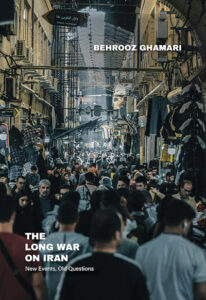
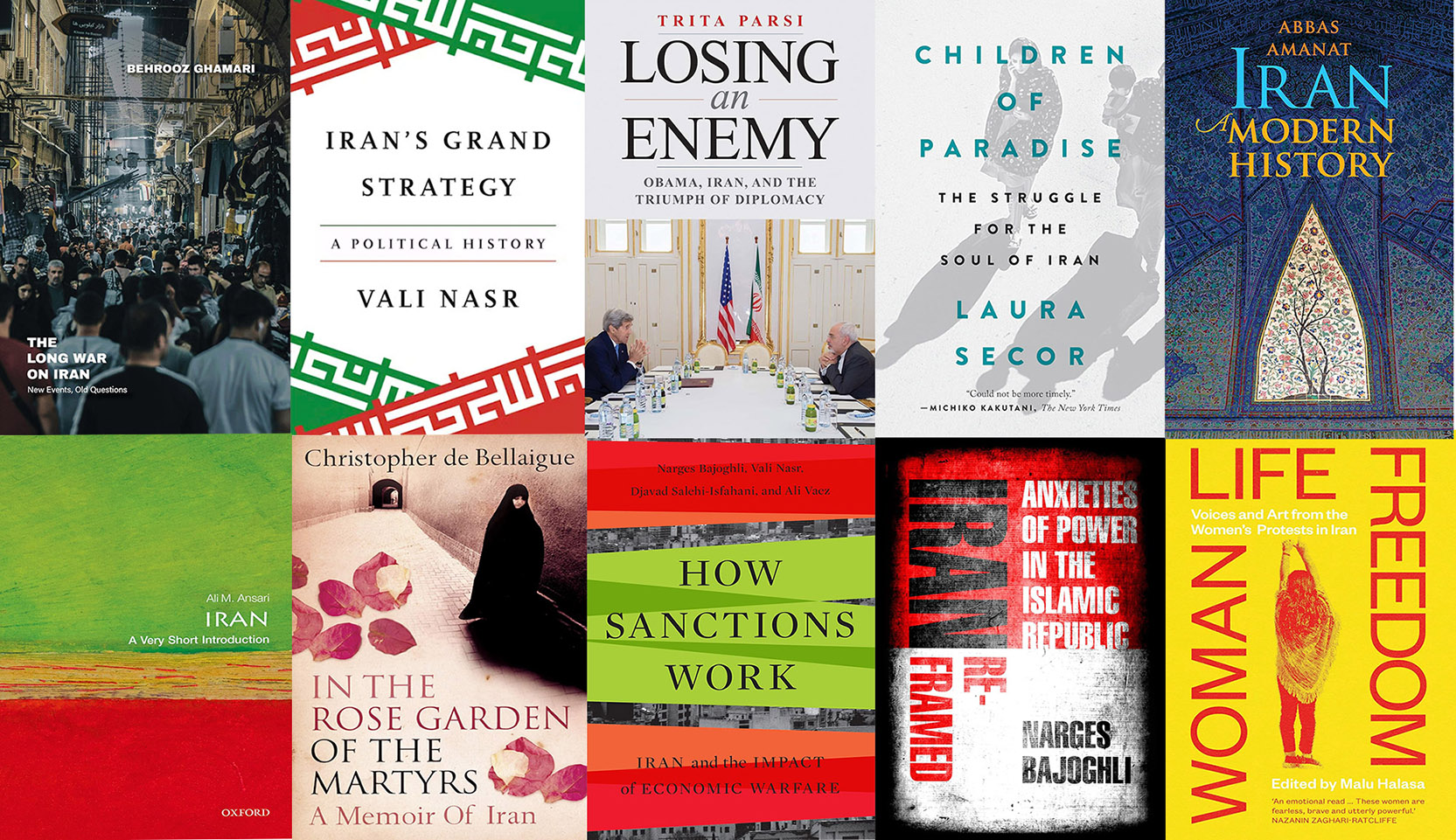
The Long War on Iran: New Events, Old Questions by Behrouz Ghamari, Or Books 2026
A concise history of the long confrontation between Iran and the United States. Ghamari argues that the long-term conflict is not just about recent issues like nuclear weapons but is driven by geopolitical rivalry, sanctions, and decades of mistrust between the two governments. He also challenges the common western image of Iran as a monolithic dictatorship, emphasizing the vitality and diversity of Iranian society. The book calls for a more nuanced understanding of Iran to move beyond the current stalemate. At a critical moment when U.S. policy is being reshaped, The Long War on Iran is a timely reminder that, if the U.S. fails to acknowledge Iran’s transformations, both nations will continue to face new events ― and the same old questions.
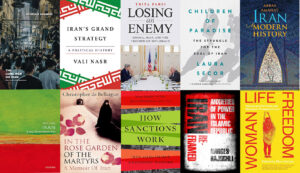
Iran’s Grand Strategy, a Political History by Vali Nasr, Princeton 2025
Drawing on memoirs, oral histories, and original in-depth interviews with Iranian decision makers, Nasr brings to light facts and events in Iran’s political history that have been overlooked until now. He argues that Iran’s foreign policy is strategic and pragmatic, not purely ideological as often portrayed in the West. The country’s worldview was shaped above all by the trauma of the Iran-Iraq War, which fostered a doctrine of deterrence and “strategic patience.” Iran seeks to outlast American pressure and build regional influence through alliances, diplomacy, and ambiguity about its capabilities. The book frames Iran’s actions as part of a long-term strategy of resisting U.S. dominance in the Middle East.
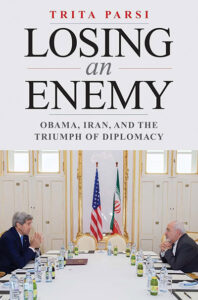
Losing an Enemy: Obama, Iran, and the Triumph of Diplomacy by Trita Parsi, Yale 2017
With high-level access to both sides, Parsi recounts the negotiations that led to the 2015 Iran nuclear deal (JCPOA). Drawing on interviews with diplomats and officials, he argues that diplomacy — rather than sanctions or military pressure — made the agreement possible, accomplishing two major feats in one stroke: averting the threat of war with Iran and preventing the possibility of an Iranian nuclear bomb. The book presents the deal as a rare moment when the U.S. and Iran overcame decades of hostility and mutual suspicion, supporting Parsi’s core argument that engagement with Iran can prevent war and open the door to normalization.
Children of Paradise: The Struggle for the Soul of Iran by Laura Secor, Riverhead 2016
With more than a decade of experience reporting on, researching, and writing about Iran, Laura Secor delivers a sweeping intellectual history of modern Iran from the 1979 revolution to the present. She focuses on writers, thinkers, clerics, and activists who have debated what Iran should become: a religious state, a democracy, or something in between. Through a tapestry of biographies and political narratives, Secor illustrates how reformist ideas and opposition movements repeatedly emerge despite persistent repression. The book’s central theme revolves around the ongoing internal struggle within Iranian society — over freedom, religion, and political power.
Suggested by Azadeh Moaveni
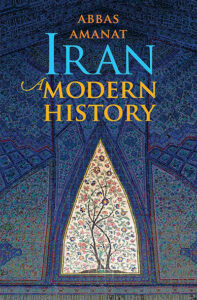
Iran: A Modern History by Abbas Amanat, Yale 2017
This history of Iran spans roughly five centuries, tracing the nation’s development from the rise of the Safavid Dynasty in the 1500s to the Green Movement of 2009. The book seeks to explain the long-term historical processes that have shaped modern Iran. Amanat argues that modern Iran cannot be understood without examining the long-standing interaction between religion, monarchy, foreign intervention, and national identity. In tracing the repeated attempts at reform — constitutionalism, modernization under the Pahlavis, and the Islamic Revolution — the book unveils the deeper struggles over power and cultural identity, revealing a society shaped by long historical continuities rather than sudden revolutionary breaks.
Iran: A Very Short Introduction by Ali M. Ansari, Oxford 2014
Designed to be quick and accessible, this 130-page book is a compact interpretive guide to Iran’s history, politics, and identity. Ansari argues that Iran is best understood not simply as a modern state but as a civilization with layered historical memories, blending mythology, empire, Islam, and nationalism. The book places the 1979 Islamic Revolution within a broader century of political transformation rather than viewing it as an isolated event. Its central insight is that Iran’s politics are deeply intertwined with its complex cultural identity and its long, ambivalent relationship with the West.
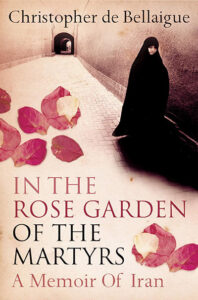
In the Rose Garden of the Martyrs: A Memoir of Iran by Christopher de Bellaigue, Harper Perennial 2016
Borrowing its title from a cemetery in Isfahan where thousands of soldiers who died in the Iran-Iraq war are buried, this literary memoir and political portrait of modern Iran is by a journalist who lived in the country and married into an Iranian family in the 2000s. Through travel, interviews, and personal encounters with clerics, activists, war veterans, and ordinary citizens, de Bellaigue moves beyond stereotypes to depict a society that is both vibrant and constrained by the Islamic Republic. In this nuanced narrative, deep religious devotion coexists alongside curiosity, humor, dissent, and cultural richness. The result is an intimate portrait of everyday life in a complex and misunderstood country.
Suggested by Kamin Mohammadi
How Sanctions Work: Iran and the Impact of Economic Warfare by Narges Bajoghli, Vali Nasr, Djavad Salehi-Isfahani, Ali Vaez, Stanford University Press 2024
This book examines Iran’s status as the most heavily sanctioned country in the world, questioning whether such measures achieve their intended political objectives. The authors argue that broad sanctions seldom weaken authoritarian regimes; rather they often reinforce state power, bolster security institutions, and impoverish ordinary citizens. In Iran’s case, sanctions merely enabled the government to consolidate control and justified a more militarized stance toward the United States. Consequently, the book concludes that sanctions (in Iran and elsewhere) can unintentionally deepen conflict rather than serving as a peaceful alternative to war.
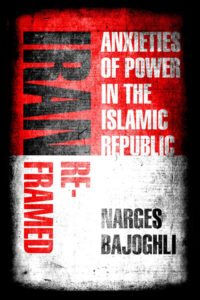
Iran Reframed: Anxieties of Power in the Islamic Republic by Narges Bajoghli, Stanford 2019
Iran Reframed is an in-depth anthropological exploration of the cultural and media networks of Iran’s pro-regime forces. Over ten years, Narges Bajoghli engaged with members of Iran’s Revolutionary Guard, Ansar Hezbollah, and Basij paramilitary organizations, to investigate how their media producers developed strategies to appeal to Iranian youth, and in the process revealing a powerful regime that is deeply anxious about its long-term survival.
TMR Also Recommends
NON-FICTION
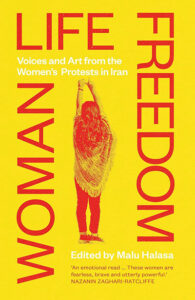
Woman Life Freedom: Voices and Art from the Women’s Protest in Iran, edited by Malu Halasa, Saqi Books 2023
A powerful anthology documenting the women-led protests in Iran sparked by the death of Mahsa Amini in 2022, capturing the visceral urgency and creative resistance that unfolded across the country. Weaving first-person accounts, essays, photography, visual art, and cultural snapshots, the book shows how women and allies challenged restrictive laws — burning headscarves, revealing hair, and reclaiming public space despite risks of arrest or worse. It highlights the role of art, body politics, underground fashion, music, and digital culture as forms of protest and expression in a society where dissent is dangerous. Ultimately, the collection serves as both a historic record of the “Woman, Life, Freedom” movement and a tribute to the courage, defiance, and artistic vitality of Iranian women and youth.
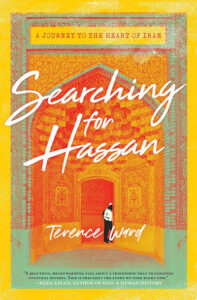
Searching for Hassan: A Journey to the Heart of Iran by Terence Ward, Simon & Schuster 2002
The “astonishing and deeply poignant” (The Washington Post) memoir of one man’s search for a beloved family friend explores the depth of Iranian culture and the sweep of its history, and transcends today’s news headlines to remind us of the humanity that connects us all.
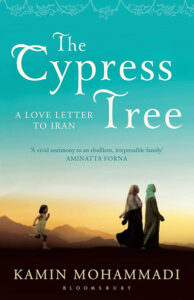
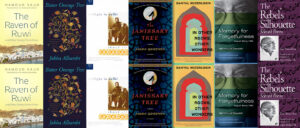
The Cypress Tree: A Love Letter to Iran by Kamin Mohammadi, Bloomsbury UK 2011
A lyrical memoir about exile, identity, and rediscovering one’s homeland. Mohammadi recounts fleeing Iran with her family during the 1979 Islamic Revolution and growing up in Britain, where she tried to suppress her Iranian identity in order to fit in. Years later, she returns to Iran and begins to rediscover her family history, the culture she rejected, and the complex reality of the country beyond western stereotypes. Through personal stories and historical reflection, the book becomes both a family saga and a meditation on diaspora, belonging, and the enduring resilience of Iranian culture.
FICTION
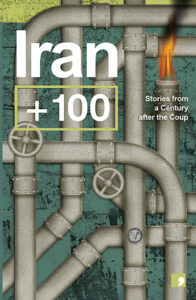
Iran +100: Stories from a Century after the Coup, edited by Fereshteh Ahmadi, Leila Elder, Peter Adrian Behravesh, Comma Press 2025
In 1953, Iran’s prime minister Mohammad Mosaddegh was removed from power after he nationalized Iran’s oil industry, which had been controlled by the British company Anglo-Iranian Oil Company (later BP). The coup was supported and coordinated by the CIA and MI6, largely to protect western oil interests and prevent Iran from moving closer to the Soviet sphere during the Cold War. Iran +100 is a collection of speculative stories by ten authors, who imagine different futures for Iran 100 years after this coup. From the upturning of gender-power structures to the scarcity of energy resources in a sun-ravaged future, from magic realism to retro-futurism, they demonstrate how old struggles can always find new forms of expression.
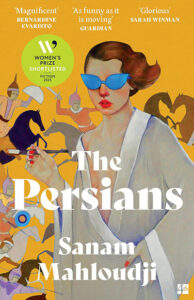
The Persians by Sanam Mahloudji, Scribner 2025
Outside Iran, the word “Persian” often brings up glamorous images — wealth, elegance, culture, luxury, and sophistication. The reality is oftentimes much messier. The novel by Sanam Mahloudji centers on several generations of women from one wealthy family, the Valiats, whose lives are transformed following the 1979 revolution, when they are forced to emigrate to the U.S. When the family’s annual vacation in Aspen goes awry, the Valiats, who have been reduced to “nobodies,” embark on reclaiming their family’s former glory as they sift through a life full of conflict, secrets, money problems, and identity struggles. Spanning from 1940s Iran to the 2000s, The Persians explores the contrast between the romanticized past and the messy reality of diaspora life.
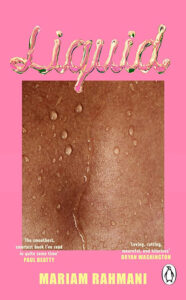
Liquid: A Love Story by Mariam Rahmani, Algonquin 2025
A young unnamed Iranian American female scholar, whose PhD thesis compared eastern and western views of marriage in film and literature, is stuck in the mire of adjunct professorship in Los Angeles. No closer to the middle-class comfort promised to her by the prestige of her fancy, scholarship-funded education, she becomes obsessed with finding a wealthy husband before she turns 30, believing it might be the answer to her financial (liquid assets) and personal anxieties (liquid identity). What follows is a whirlwind summer packed with dating, until a tragedy in Tehran compels her to return. Once there, she is forced to confront the complexities of her dual existence, and attempts to reconcile the freedoms of her life in the U.S. with the challenging realities of her roots.
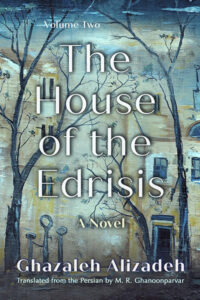
The House of the Edrisis (volume I, 2024) & (volume II, 2025) by Ghazaleh Alizadeh, translated by M.R. Ghanoonparvar, Syracuse University Press.
This major work of modern Persian literature published in two volumes is widely regarded as one of the most important Iranian novels of the 20th century. Set in the imaginary city of Askhabad (what is now central Asia), the work uses one family’s world and their crumbling ancestral home as a lens to examine societal transformation, memory, and the complex interplay of past and present. Alizadeh’s sardonic story with elements of black comedy and farce cleverly parallels the Islamic Revolution in Iran and offers an intimate portrait of both young ideologues-turned-tyrants and jaded women whose hope for change slowly fades. This first-ever English translation of The House of the Edrisis, in two volumes, offers an unforgettable immersion in one writer’s vision of the upheavals and transformations of a world remade by revolution.
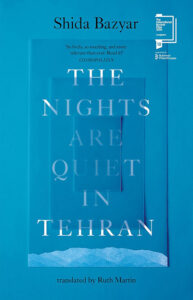
The Nights are Quiet in Tehran by Shida Bazyar, translated from German by Ruth Martin, Scribe US 2025
Longlisted for the International Booker Prize 2026, this polyphonic novel of one family’s flight from and return to Iran is a moving exploration of revolution, oppression, resistance, and the absolute desire for freedom. The novel opens during the Iranian Revolution of 1979, when Behsad is a young communist revolutionary actively involved in political change after the Shah’s departure, and is in love with fellow activist Nahid. The novel follows the couple a decade later, living in West Germany with their two children, having fled Iran to avoid persecution. In 1999, their daughter Laleh returns with her mother to Tehran for the first time. She confronts a city very different from her memories as a child as she navigates cultural expectations, family secrets, and the awkward feeling of “being home” yet not fully belonging. Conversely, her brother Mo, is distant from Iranian politics. The novel has been described as both “poetic” and “emotionally resonant,” blending personal stories with broader social and political contexts, showing how each generation deals differently with identity, memory, and cultural displacement.
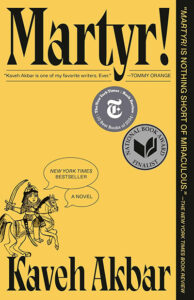
Martyr! A Novel by Kaveh Akbar, Vintage 2024
Cyrus Shams is a young Iranian American poet struggling with a drug addiction, depression, and the trauma of losing his parents — his mother was killed in a plane accidentally shot down by a US missile over the skies of the Persian Gulf, and his father later died while raising him in the US. When Cyrus adopts sobriety, he takes on a new addiction: he is obsessed with the idea of martyrdom. A pilgrimage to New York to meet a terminally ill Iranian artist allows him to finally explore his grief and the search for purpose. Akbar’s debut novel frequently draws on Persian poetry, spiritual motifs, and Iranian history, which inform Cyrus’s understanding of suffering, resilience, and the search for meaning, making the story both a personal coming-of-age and a meditation on cultural belonging.
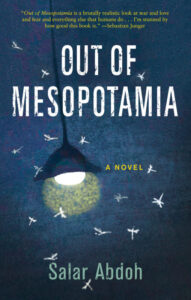
Out of Mesopotamia by Salar Abdoh, Akashic Books 2020
Imagine getting into Iraq and Syria as an observer of the war on ISIS, and yet very soon after you’ve been close enough to RPGs to smell the explosion and feel the ground shake, you find yourself back in your old life, giving literary readings at swank bookstores in cities at peace, or attending highbrow academic conferences where nobody’s dying, except perhaps bored audience members. Juxtaposing the two realities — one savage and ridiculous, the other sane and predictable — is what Salar Abdoh is after in Out of Mesopotamia. The novel underscores the humanity of its characters while emphasizing the absurdity of war and colonialism’s aftermath, pointing out what existed before and what remained after Sykes-Picot divvied up the region — quite as if Europe owned the world. — Jessica Proett