This forthcoming collection explores grief and displacement through the entanglements of family and empire, human and animal, body and language.
from When the Arab Apocalypse Comes to America
I grant you refuge in knowing
that the dust will clear,
and they who fell in love and died together
will one day laugh.
—Heba Abu Nada, “I Grant You Refuge”
The sun can no longer look us in the eye. Refuses the image
of a shriveled corpse, of a corpse starved before it was
dismembered, of a corpse tangled into a net dropped into the sea
& called “aid,” of a corpse unimageable beneath rubble, of a corpse
that became rubble, of a hollowed-out people returning to the sea
in thirst. In refusal, the sun became an image of
everywhere: a red sun staining a bag of flour, a hemorrhage
in the shape of a green sun, an abscess, a wound from the eye
of the wound of the yellowed sun, a blue-beaten sun, a kingdom
of jaundice. In the body’s silence waits the sun of STOP
I looked the sun in the eyes for six months unwavering STOP
in the opposite of nature I found a wilderness of STOP
is green the color of silence or is green a color of a kind
of apocalypse ر I AM BECOME G A Z A said the sun
refusing still to look any of us in the eye
I can’t bear their springtime. It will be winter all winter
& spring & summer & we will still be waiting for another
fall. My father died in autumn, a death so American
it became a Palestinian death, & it was winter all year
after. Can we imagine 40,000 years of winter? The rubble
of it? A year for every unknowable dead beneath the avalanche?
All of them, such Palestinian deaths they became American
deaths. On the opposite ends of oceans, my people are and are not one
in corpselessness. Empire wants us to think ourselves exceptional
in grief. Whiteness wants us to think we are unmournable
in mass. Is there a door on the other side of winter
or is every season merely tunnel? This is the winter that became
the winter that never ended. America deserves no redemption
of sunshine, only heat death from which we cannot wake, for all
our sakes. We’ll stop this world, ya Gaza. We’ll stop this world &
RED the line of protest resisting borders
RED the body at stake for the body politic to come
RED the animal grief to which we are reduced
RED the stain of a maiming resisting articulation
RED the permissible name for slaughter
RED the house to be built over, the body to come
RED the soil of Gaza refusing to give permission to
RED the beheading’s aftermath Rafah wasn’t afforded
RED the tint with which we see their every face
RED the line un-deadened, the poem unredacted
RED the hands of every executive board who
RED the illiteracy of every squint & bend & twist
required to unsay the name of
RED the river and the sea, Palestine and horizon of
RED the country purged from every American
RED the world at stake beyond our reach
Necrovitalism
I
How can any kingdom, animal or otherwise, language our deaths
when our murderers slur us into creatures? Wild beasts. Camel
riders. Little snakes slithering from the singular wound
of a mother. Even nature confuses us writes a Gazan poet.
The image, not of birds, but the mere existence of clouds
when their forces synonymize sky with shrapnel in that landscape
of language, where Palestine is case or metaphor or question
before land, let alone, loss. A country later, I step into language
like the soft carcass of a squirrel, flattened mid-crosswalk
into an American sadness. Those lucky enough to be displaced
across an ocean open sandwich shops for Southerners, say white,
wheat, or […] rider? for bread options in drive-throughs. The camel
in rider, unspoken as the word pita, to their audience of beeps
& hurried meats. There is no poetry in this, only carcasses without
*
music. A soldier, identifying as former, approaches
after my reading, asks me to grab beers & talk
like we’re civilized & I want nothing more than to call him
haywan, but settle on giving him the address to an email
I no longer read & here, were I to assume he was calling
my poetry the opposite of civilized, I wonder what to make
of everything a man like him did to make a living,
or whatever his country broke in the small of his
language: a fear of Arabic gutted to instinct,
the memory of […] compressed to merely number,
where digit ends and face begins, like a border
between a country and a body’s leaving.
He lingered like the muscle memory of a corpse,
soft & oozing, I didn’t know I was stepping on.
II
NO DOGS IN THE HOUSE! my father would yell,
in my childhood, & because he is dead, the yorkie
Mama always wanted now runs through empty halls,
splays out on the couch Baba would sleep on
& I’ve never seen our home happy like this. At first,
I mistook all of it for love— the dog’s gentle paws,
fading beside me, or how she’d rise like a new morning,
greeting me like her best friend from a past life, each time
I’d disappear from her sight— this object permanence
of need. Whatever dis/continuities are the ones we can bear.
I don’t know how to be needed like she doesn’t know how
to stay— she can blink & pass a whole eternity. She flinches
daily at the sight of my soles. She knows no time, just trauma
with lower stakes. Perhaps her kingdom was always a question
*
of permission
xxxxxxxxxxxxxxx to slaughter: not the biology
of another martyr
felled beneath
xxxxxxxxxxxxxxxxxxxx bomb shrapnel
xxxxxxxxxxxxxxxxxxxx xxxxxxxxxxxxxxxxxxxxx but the zoology
of animals,
xxxxxxxxxxxxxxxxxxxx rabid, clawing
xxxxxxxxxxxxxxxxxxxx xxxxxxxxxxxxxxxxxxxxx at the gates
of another impossible
xxxxxxxxxxxxxxxxxxxxxxxxxxxxxxxxx summer.
from When the Arab Apocalypse Comes to America
unbellied the yous who slur me cannot resist me un 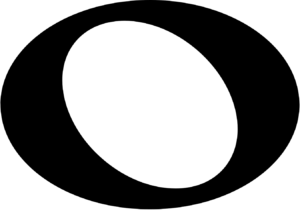
believably a disposable sun  or was it despiseable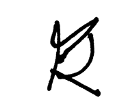
I had to dull my claws of their red to allow my I to come
the sun is a twinkhole in the sky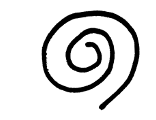 TWINKLE TWINKLE little
MAZEL TOV or was it Molotov I was barely 18 the first time I
STOP is where the Palestinian body rhymes with QUEER
the way a bough bending to a weight beyond itself rhymes with a bow before
an inconceivable thronexxxxxxxxxxxxxxxxit isn’t that we are un-nature
but that their kingdoms craft nature at the expense of our bodies.
xxxxxxxxxxxxxxxxxxxxxxxxx xxxxxxxxxxxxxxxxxxxxxxxx x
when the Marsh Arab became human STOP when want was all animal –
in the post-image we will shoot our garbage into the sky like cunty cows
O Etel how to love my people in this H/EATING H/EATING H/EATING
we’ve become is there canon without monstrosity is there monstrosity without STOP
mudded we were rotund, rounded we wore the earth & became