In this new novel, the author is inspired by her father’s story — a Palestinian who went into exile in 1948 in search of a new place to call home.
Paradiso 17, by Hannah Lilith Assadi
Knopf 2026
ISBN 9780593804056
Hannah Lilith Assadi keeps returning to the same story.
Sonora, her first novel in 2017, and Paradiso 17, her just-released third novel, both begin with a daughter at her father’s sickbed. In both, the father suffers from cancer. The mother is Jewish (Israeli in Sonora, American in Paradiso 17). The father is Palestinian, a Nakba survivor, a taxi driver.
Both novels are about the desert, about ghosts. Both end with a death.
But Sonora is the daughter’s story, a coming-of-age novel set mostly in the Arizona desert, with teenage friendship at its core and an obsession with mysterious adolescent deaths. Paradiso 17 is the father’s story, a tale not just of his death, but his entire life, lived across continents.
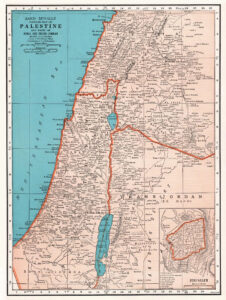
A few pages into the new novel, Assadi turns back time and takes us to the beginning, to the childhood of the father, Sufien Assadi, in pre-Nakba Palestine. (The characters share the author’s surname.)
Hannah Lilith Assadi has said Paradiso 17 is based on her father’s life, and what a life she portrays. Born in December (no exact date known) “like the prophet Isa, otherwise known as Jesus Christ,” Sufien’s story begins in the town of Safad in the early 1940s. His wish to fall, perhaps to die, becomes a theme throughout the book, and it starts at age five in Safad on a clear spring day, weeks before the catastrophe of 1948, the end of Palestine as Sufien knew it. Hearing a jinn encouraging him to fly, he jumps from the roof of his house and, instead of hitting the ground and dying or breaking a limb, is caught by the branches of a tree.
He has had his first brush with death, and “Even at so young an age, Sufien mused to himself about whether it would have been better to have been spared from the rest of his life right then and there.” This tension between life’s potential for beauty and suffering follows Sufien throughout his life. Soon his family is fleeing the Haganah, walking all the way to Damascus, then displaced again to Kuwait, where the sound of the Arabian Gulf is “like the voice of the divine.” In Kuwait, Sufien has a boyhood crush on a fellow refugee, a girl named Nefisa whose memory will return to him until his dying days.
Fate keeps pushing Sufien further along. Sufien’s father dreams his oldest boy will leave Kuwait; Italy opens its doors to Palestinian students, and Sufien goes. He will never return to Kuwait or Palestine. In Italy, he falls in love with a woman named Lila, meets his best-friend-for-life Bernardo, fails to become an engineer, runs a leather business, and sometimes goes by the name Frank Leone. After Italy will be nearly two decades spent in New York, where Sufien meets and falls in love with his wife, Sarah, and where their daughter, Layla, is born. Then Arizona, which becomes the place of his heart, his “true home.” Assadi writes:
It was hallucinatory, the desert. Scattered saguaro lay dead, like the fallen in war, contorted and broken. Others lifted their arms in praise, and beholding them, Sufien understood why it felt like home. The desert was in exile from the Earth itself.
In Paradiso 17, Sufien’s life — his travels and exploits — is the plot, and Assadi uses a clever technique to move the narrative forward in circular fashion: Each chapter title is also the final line of the chapter. In this way, Assadi layers return after return into Sufien’s story, even as he stays in one place for a while before moving on. She has a knack for transforming what likely started as family anecdotes into the stuff of novels. And, perhaps because he is based on someone she knew and loved so well, Assadi creates in Sufien an unforgettable, believable, all-too-human character.

Sufien may be Palestinian, but he is no perfect victim. He gets thrown in jail for soliciting a prostitute, loses his car, falls riding his bike while his young daughter is at home unsupervised, fights with his wife, throws things, cheats, drinks too much and does drugs, gets repeatedly blackmailed by his mistress, starts and bankrupts several businesses, and relies time and again on the financial largesse of his wife, his father-in-law, and Bernardo (all Jewish). When he is diagnosed with cancer, he hides his illness from his wife and, on the terrible advice of his always high former mistress, takes testosterone, which only makes the tumor grow.
Assadi is excellent at slowing down time and speeding it up. On the night Sufien and Sarah bring infant Layla home from the hospital, Assadi writes:
Sarah had some presentiment of the vertiginous passage of time, how fast it would go, their daughter’s childhood, how one day Sufien would be walking her to preschool, talking about the hunt for four-leaf clovers in their Brooklyn backyard, and then so soon over breakfast at their future house in Arizona, he would find her wearing makeup already …
In the space of a page, the passage moves us through Layla’s acceptance to Columbia, a disastrous relationship, meeting her future husband, a miscarriage, the birth of her children — then back to Sufien who, “could almost feel it all then, that dizzying forward motion that accompanies having children. … He had never been more afraid. He had never been more in love.”
Paradiso 17 is fiction but also not fiction; it blurs the line, though only Assadi knows what’s blurred and what is not. One can see why Assadi chose to tell this story in novel form. In fiction, as opposed to memoir, the author can inhabit the other characters and stitch together and fill out family anecdotes, rather than stick to her own point of view. Still, we’re aware this book is how Assadi imagines her father’s life might have happened. And his Palestinan-ness, too, comes to us through the lens, one assumes, of the author’s observations not only of him, but also his relationships with others, including his wife. After Layla is born, Sarah starts to doubt the wisdom of marrying Sufien:
There was another fact about Sufien which Sarah had not really digested during their courtship: How Palestinian he was, how Palestinian he always would be, as if it were another organ of his. Being an American, being Jewish even, felt like a scent Sarah sometimes wore, occasionally powerful, but hardly essential to her life.
The conundrum Assadi sets up, the puzzle that cannot be solved, is how Sufien is a complete individual, an outlier, a wanderer, and also a product of forces that have shaped many lives, pushing Palestinians outward, making Palestinian-ness an inseparable part of its bearer’s humanity, turning immigrants into taxi drivers, transforming Arabs into “fucking Arabs.”
Sufien is not overtly political; in Italy, his revolutionary friend Yasin calls him a “Jew-lover.” Yet Palestine is the ghost that haunts his life, and his life, he seems to know, is an argument for freedom and return.
Sufien always harbored a minor belief that he would write his memoir one day, that he would publish an op-ed in The New York Times, that his brilliant words would save Palestine, and he, and all the others who left in 1948, would receive reparations for their lost homes (at the very least!). The occupation would end. None of these things ever happened.
Here we see that in Assadi’s book, the real-life daughter is doing what her fictional father could not do: writing his “memoir.” But there are no illusions here about brilliant words saving Palestine. As the book nears the end of Sufien’s life, bringing us back to the room where we saw him in the novel’s first pages, he is wasting away, hallucinating. When his granddaughter runs by, he doesn’t know who she is, and they have this exchange:
Hi Jiddo, the child said.
Atini mai, he said to the little girl. He wanted her to bring him the water. The pure water. Because she was young enough to remember it. She knew what he meant.
Ehna rajiun, he said to the child, and she nodded her head.
Crucially, Assadi does not translate or italicize “Ehna rajiun.” If you know, you know. And we know, from the start, that Sufien is going to die in this fictional world, just like we know everyone in life will die. But that doesn’t make his last days any less sad or his conviction of return any less compelling. In Arabic, the plural ehna can also connote a royal we. The ambiguity matters. “I am returning”/“I will return” and “We are returning”/“We will return” are spoken in the same breath.
While writing this review, I read in these pages Mai Al-Nakib’s consideration of Salman Abu Sitta’s Mapping My Return: A Palestinian Memoir. If Abu Sitta’s body of work makes a geographic case for the possibility and necessity of Palestinians’ return to their land, then Paradiso 17 makes a philosophical case for return. Or rather, the novel argues that return is both impossible and inevitable; Sufien can never go back, will never go back, but we are all, always returning. Inna lillah, wa inna ilayhi raji’un.
And given that Palestine is God’s holy land, then, it follows, ehna rajiun. Liberation and reparation will only come if we keep returning to the same story.