





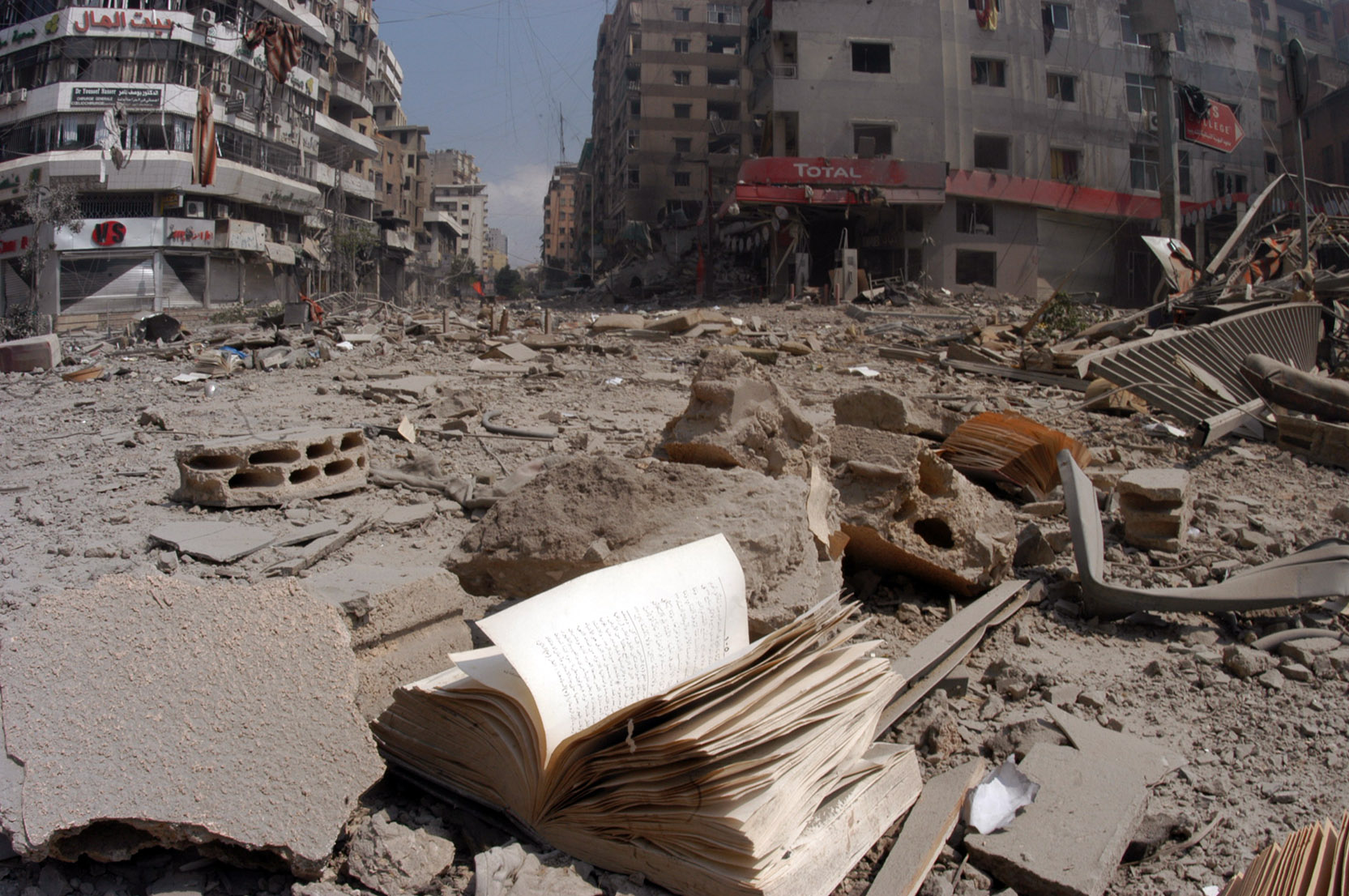
We all knew this war was coming. Last year's 12 Day War was but a dismal prelude to what Israel and the US had in store for Iran, but this time, the stakes are far higher.
We all knew this war was coming. Perhaps as a Lebanese I was more attuned to it than most, given that our entire lives here have been lived under the shadow of the next Israeli war perpetually hulking our way. But since October 7, 2023, when we began to grasp the magnitude of Hamas’s action — not its “savagery,” or “barbarism,” as the Western media had it, but rather the size of its affront to Israel’s sense of righteous inviolability — this: war, its regional spread, its potential to be a shatterer of the entire world, seemed only a matter of time.
This is not to make it sound as though Israel is the sole instigator of this war. Even if, Netanyahu, in his own words, has been “dreaming of this war for 40 years.” No, it is not just Netanyahu. Nor is it just Trump. It is incumbent upon us not give into the lazy impulse of using their names as shorthand for the disaster of the current moment, or to get into debates about who is the tail and who the dog, when both are simply different heads of the same ravening beast.
Because this disaster has been building for decades upon decades, a malevolent seed of European colonialism, watered by the poisonous regime change projects of successive US administrations, by the toxic chemical runoff from Israel’s prohibited weapons of mass destruction, and finally, given an open environment in which to grow and mutate through the shattering of every possible law of war or moral of combat (as oxymoronic as the terms might be) by the genocide in Gaza. In some ways it feels like the history of the entire region since the end of the first World War has been leading to this — a multi-front battle that I am near-certain the history books will refer to as World War III.
The war was launched jointly by Israel and the US on Iran on February 28 right in the middle of negotiations about its nuclear program — the second war launched on Iran in the midst of negotiations — beginning with a rain of destruction across the country and mass assassinations of much of the Iranian leadership, including the country’s supreme leader, Ayatollah Ali Khamenei. Iran retaliated as it had promised: by shelling Israeli territory as well as the American bases in the Gulf countries surrounding.
For two days, we in Lebanon watched these developments under the illusion, or rather delusion, that this war wouldn’t reach our soil, that Hezbollah was too depleted to step in and offer any support to Iran after the official end of the war between Israel and Hezbollah at the end of November 2024. But the series of earth-shattering booms that roused Beirut out of bed in the early morning hours of March 2 left no doubt: the low-level attacks that Israel had maintained throughout the 15 months of the so-called ceasefire were blazing anew into all-out war.
In the nearly two weeks since the ignition of these battles, we have witnessed an attack on a girl’s elementary school in Minab, Iran, which killed 170, most of them girls from seven to 12 in age. And last night, an attack on refugees sheltering in a tent on a cold beach in Beirut. They fled to what they thought was safety only to find that nowhere is safe from Israel’s killing machine. To express outrage at these two monstrous incidents would imply that we expected some remnant of the rule of law, which once told us that it perceived such acts — of clear barbarism — as war crimes.
But we have learned from Gaza that there is no rule of law, and that there are no repercussions for the crimes of the powerful. And that lesson of Gaza was only the most explicit iteration of the same lesson that the United States has been teaching us here in the region for nigh on a century, sometimes directly, and sometimes through its proxy, Israel. For there has been no repercussion or reparation for the Western-orchestrated coup against Mossadegh in Iran in 1953, a punishment for the crime of daring to nationalize Iranian oil; and no punishment or reparation for the invasion and piecemeal dismantling of Iraq; nor for the multiple Israeli invasions of Lebanon; nor for the countless crimes against the Palestinian people since the original crime of the Nakba in 1948.
No, we are past all outrage. Outrage implies a kind of incredulous looking around, seeking camaraderie in the shared incredulousness of those around you. What we have instead is a weary, quiet knowing, a result of seeing the world as is. We know only one thing to be true: We have no one but one another, fellow victims of this old, rotten world order, fellow seers of its sins.
And this realization that we first came to in utter despondency, we must now hold on to as our strength. What was understood in the ongoing shock of loss after loss is now revealed as gift: We have no one but one another. This community of ours, those of us currently under the bombs, those watching from the outside, frantically checking in on friends and family and colleagues, those united in a camaraderie of grief. We turn our backs now to a world that turned its back on us, not out of resentment but to better hold one another close, to turn our attention inward, toward the people and places and things that deserve it.
I write this after a sleepless night in Beirut rocked by airstrike after airstrike. Right now, the sky above is growling with menace; the warplanes and drones flying low. Every so often the distant, and then not-so-distant boom of another hit. The Israeli army spokesperson sends nonstop messages of threat in Arabic to us, warning us away from certain areas. Then they hit other areas without warning.
There are one million people who have been displaced from their homes and Israel is now hunting them down in their tents and shelters. There are nearly 4 million displaced in Iran. Nearly 2,000 dead in both countries after less than two weeks of fighting. Black, poisonous rain falls over Tehran. The destruction is also of human heritage: 14th century palaces, 17th century mosques, architectural marvels have been damaged in Tehran and Isfahan. There seems to be no off-ramp to this utter catastrophe. And all throughout this, no end to the genocide in Gaza, to the settler-led slaughter and takeover of the West Bank. The old world is dying. And not a moment too soon.
But in this time of monsters, I am also experiencing what I always experience during wartime. For this isn’t my first war. Friends’ homes that are always open day and night. The forming of immediate mutual aid groups; people volunteering to cook for one another, to bring one another essentials. Pharmacists opening long past opening hours to mete out medicines to people who had to leave everything behind. Civil defense teams rushing to the site of disaster. And beyond that, the wider communities that have formed in these two and a half years of concerted horror: all of us learning from one another, trying to understand the process of helping the new world to be born.
We have no one but one another. We have nothing but community. And this, here, you and us at TMR, our readers, our writers, our editors, we are all part of one of these communities that loves and learns from and tends to and hopes for and works toward and celebrates and teaches of this beleaguered region of ours. This center of the world, that may yet prove to be the ground that yields new fruit, fertilized by the decay of this old and dying empire. As before, with the beginning of the genocide in Gaza, we hope you will come to us at TMR for a sense of community, for the voices and vision of the world we hope to usher in, and to lend your own voice and vision to our project. The days ahead will be extremely difficult. But we hope they bring us closer to a future that can ensure freedom and self-determination for all the peoples across our region, finally rid of the shackles of imperialism and colonialism.

This is excellent!
Beautiful and powerful piece Lina!
Thank you!