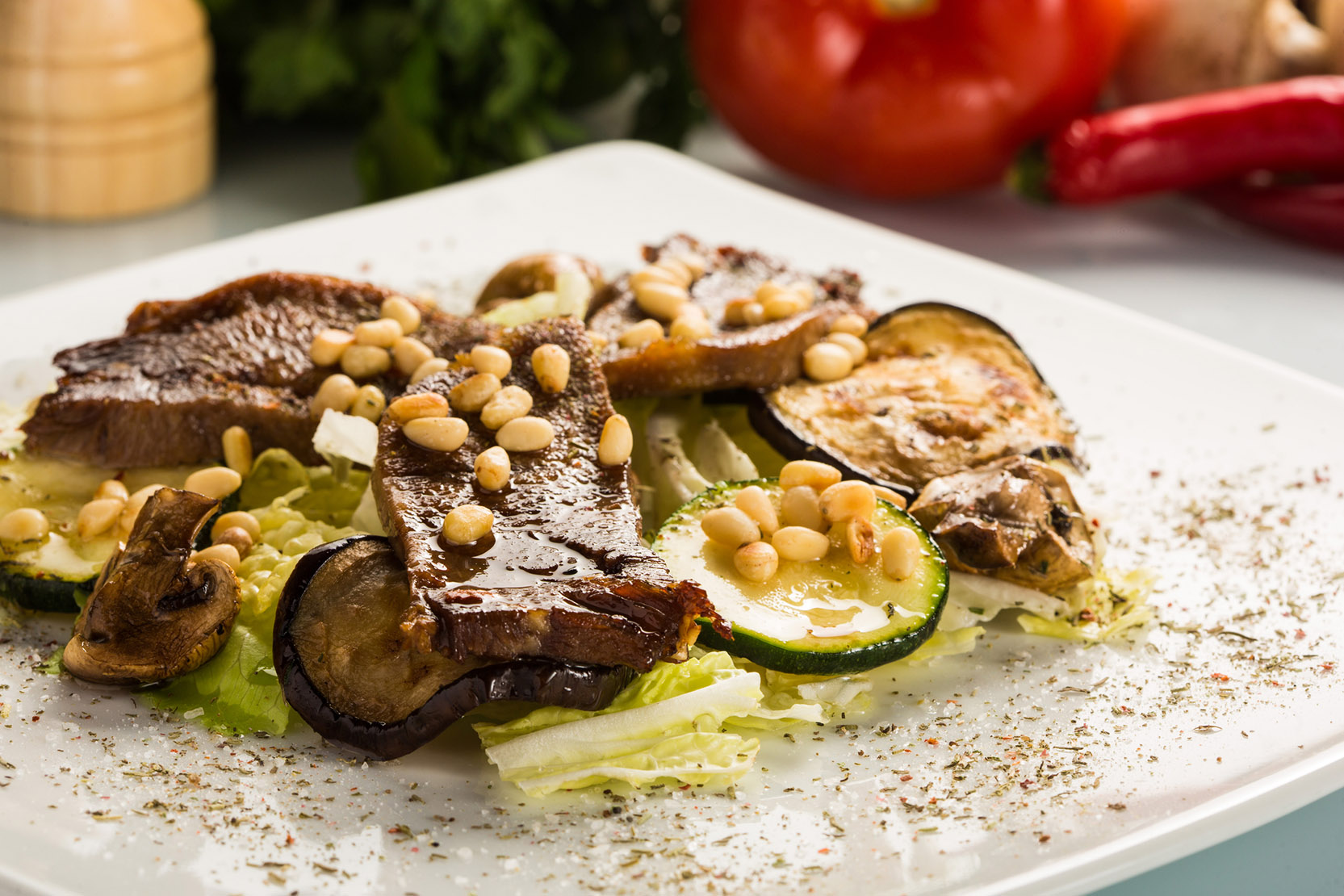
Acclaimed chef Anissa Helou reflects on the delights of eating tongue, and shares a few of her recipes for the ideal ways to enjoy it.
I have always been fascinated by my mother’s beautiful hands, and this from when I was very young. Her fingers were long and thin and remained the same as she aged, the skin a little looser and more wrinkled of course, but their shape never gnarled, right up until she left us in her early 90s.
Her hands moved elegantly and steadily over whatever she was doing, whether it was sewing — which she did beautifully — or gently dabbing cream over her face (she took great care of her skin) — or cooking, which she did brilliantly. And it is in the kitchen that my delight in her hands was at its most thrilling, not to mention most enjoyable, because of the prospect of my feasting on whatever she was preparing.
I loved watching her neatly align stalks of flat-leaf parsley so that she could chop the leaves into very thin, crisp slivers for tabbouleh or a garnish, but what I loved most was when she got her refined hands dirty. The contrast between the elegance of her hands and the grubbiness of whatever she was working on, whether it was cleaning and stuffing intestines and tripe for one my favorite dishes, ghammeh, or peeling tongues, was quite mesmerizing. As a matter of fact, her seamstress skills came in handy when she made the tripe parcels, first cutting them into somewhat equal pieces before folding them in two and sewing up two sides to create pouches. She left one side open so that she could insert the meat, rice, and chickpea filling before sewing the whole thing shut to ensure that the stuffing didn’t spill out during cooking.
As for my delight when she prepared tongue, it started with how alien they looked as they flopped on the chopping board, a sight that suited my mischievous imagination. There was in fact a rather monstrous quality to them, whether it was a gigantic ox tongue, or a mound of small lamb ones, depending on what she was preparing for us that day. If it was lamb’s tongues, my mother would count at least one per person, and as we were always a minimum of seven around the table — more if we had guests of course — she always had a sizeable quantity to work on.
Tongues need a fair amount of preparation whether large or small. She had to first boil them in order to peel off the thick, coarse skin before finishing whatever dish she was preparing. This isn’t so easy, as the skin adheres quite tightly to the flesh. Not only that, it has to be done while the tongue(s) are still hot. Regardless, my mother’s slender fingers were up to the task. She didn’t quite have asbestos hands but they seemed to withstand the heat without feeling the burn; and she had enough strength to pull off the skin wrapped around the tongue in pretty much one swift movement.
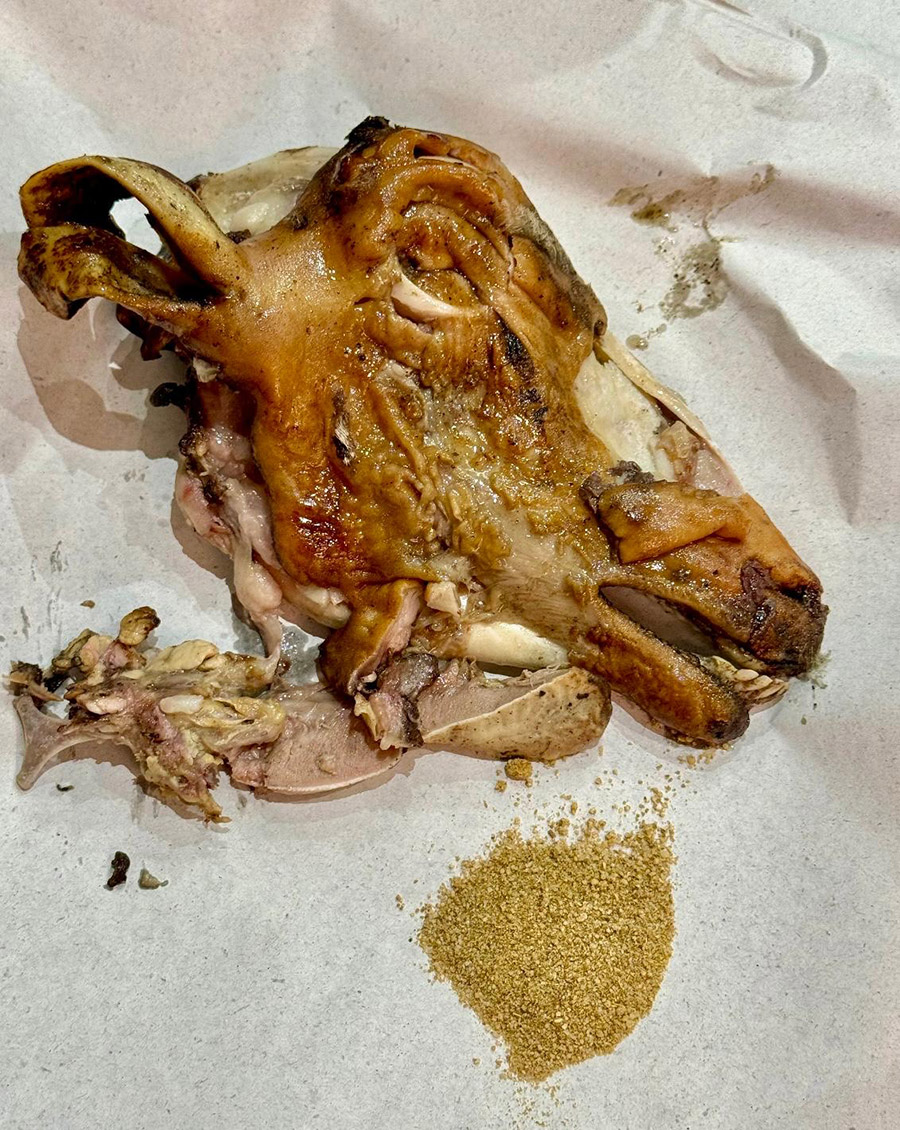
If she was preparing ox tongue, she would cook it in a tomato sauce with potatoes and garlic that she seasoned with what I call the Lebanese trinity of spices: ground cinnamon, allspice (or 7-spice mixture), and black pepper. And if tiny lamb’s tongues were on the menu, she simply boiled and peeled them, then cut them in half lengthwise without completely separating them in order to butterfly them. She then arranged them over a salad of shredded lettuce, mint, and spring onions, which she seasoned with a garlic, lemon, and extra virgin olive oil dressing, drizzling more over the tongues, and finally garnishing the whole with chopped parsley. These tongues were actually even more alarming, because they looked like human ones — in fact later, when I grew up, I always found it difficult not to think of a lover’s tongue as I bit into one, given that they are more or less the same size!
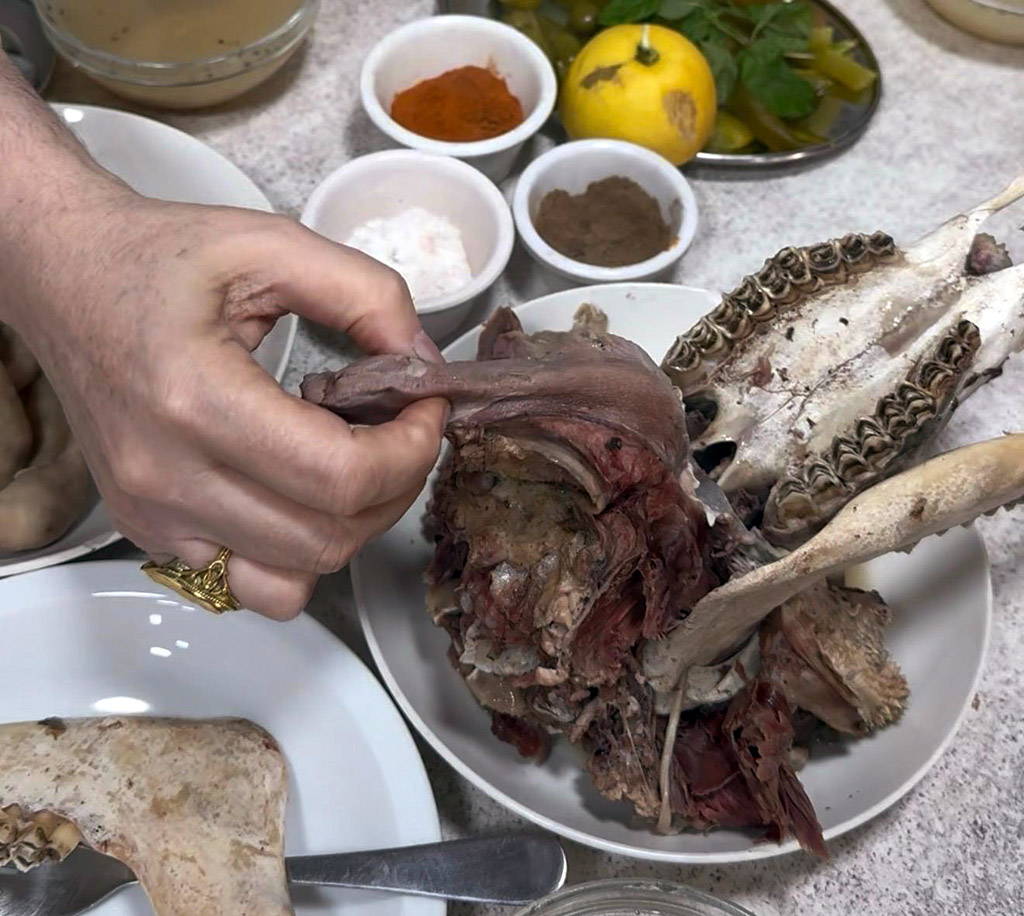
These were basically our tongue repertoire, unless we had lamb’s heads, in which case my mother would pry open the boiled head(s) by holding one jaw in each hand and yanking them apart to leave the tongue dangling off one half. It was the first morsel we would feast on before moving on to other gory parts such as the eyes and brains. Oddly enough, when tongue was eaten with the head, the skin was not peeled. My favorite part was the back bit that had no skin to start with and was fattier, the delicate glands still attached to it. It had a lot more texture than the plain front end and seemed tastier.
Lebanon is not the only country where people relish tongue. In England, ox tongue is also a prized cut, although it is naturally prepared differently. Once it is peeled and completely tender, it is pressed then thinly sliced to eat like ham or a cold roast.
In Spain, ox tongue is shredded before being used as a filling in a sweet-savory pie that is not unlike Moroccan pastilla, while in Morocco, it is cooked in tagines. That said, I have never seen it on menus there despite having visited the country many times.
The Italians also go for a sweet-savory finish when it comes to tongue. Lingua di Bue in Agro Dolce (meaning sour-sweet ox tongue) is a specialty from central Italy and the recipe is even more interesting than the Spanish one. Once cooked and peeled, the tongue is sliced thinly and finished in an extravagant sauce made with a mix of dried and candied fruit, nuts, chocolate, and a healthy amount of vinegar that really lifts the bland taste of tongue meat.
As for China and other eastern parts of Asia, they are keen on tiny duck tongues. They are very different not only because they are minute, but also because unlike other floppy tongues, they have a bone, or more accurately cartilage (hyoid) hidden inside that juts out at the end in a thin shape; diners hold on to these two bones so that they can suck off the rather gelatinous meat. Duck tongues are sold in China with the bone inside the tongue whereas in the West, they are sold in frozen blocks already deboned. They can be grilled, braised, or stewed. Once they were considered a privileged delicacy, and a preserve of the wealthy, given that there is only one tiny tongue in each bird.
As for Japan, I recently watched a video of a chef preparing ox tongue in a way I had not seen before. He first pressed the tongue while still raw before slicing off the skin — together with a fair bit of the flesh — in order to have a block with straight sides. He then sliced the block of tongue into thick, small, steak-like pieces and grilled them over charcoal — but only enough to sear the outside while leaving the flesh very rare. He then sliced these into bite-sized pieces, a bit like sashimi, and served them with a dipping sauce.
The fact that tongue — whether it comes from an ox, lamb or duck — is a very small part of the animal has made it a delicacy everywhere. There is only one tongue on any one of these animals, and it naturally weighs considerably less than either the meat or offal in the body. To those who aren’t squeamish, it is often the most prized cut of all.
So, my suggestion, to those of you who are particular about eating some parts of the animal and not others that they find weird or off-putting, is to put your prejudice aside and try any of the recipes below. A few are elaborate while the others are fairly simple. The choice is yours and hopefully, if you are not already converted to the delights of tongue in all its forms, you will be inspired to add it occasionally to your culinary repertoire.
Ox Tongue Stew with Potatoes
Rosto
I always thought that this Lebanese dish had its inspiration in French cooking and when I read the classic French recipe, my suspicions grew stronger. It must have been during the years of the French protectorate that the Lebanese came across French ox tongue in tomato sauce and, given their taste for all things foreign, they must have adopted it as one of their own. Then, as always happens with recipes that are embraced, they must have changed it to suit their palate, adding their own traditional spices. Then, probably because of seasonal supply, they must have skipped fresh tomatoes in favor of tomato concentré and finally they replaced the cornichons and capers with potatoes and garlic to produce a very different dish, with a spicier, heavier sauce that is now very much our own. Rather convoluted conjecture of course, but I find that it makes a good, as well as a pretty credible, story. Serves 6 to 8.
1 ox tongue weighing 1 ¼ kg
3 medium cinnamon sticks
3 medium onions (about ½ kg), one left whole and the others quartered
sea salt
2 teaspoons allspice (or Lebanese seven spice mixture)
1/2 teaspoon finely ground black pepper
1/4 teaspoon ground cinnamon
20 cloves garlic
50 g unsalted butter
2 tablespoons vegetable oil
1 x 140 g can tomato concentré
1 ½ kg medium-sized potatoes, peeled and quartered
Soak the ox tongue in several changes of cold water for a couple of hours to get rid of any blood. Drain and rinse well. Put in a large pot and cover with water. Add one cinnamon stick, the whole onion, and a little salt. Bring to a boil over medium heat. As the water comes to the boil, skim it clean. Simmer for 1 hour then remove from the cooking broth and peel off the thick skin while the tongue is still hot. Otherwise the skin will not come off so easily.
Mix the spices together with a little salt to taste. Dip half the garlic cloves into the spice mixture. Make 10 slits all over the tongue and insert the seasoned garlic cloves into the cavities.
Put the butter and oil in a large clean pan and place over medium-high heat. Add the tongue and brown it on all sides. Remove onto a plate. Add the quartered onions and remaining garlic to the pan. Sauté for 5 to 10 minutes or until softened and lightly golden, then return the tongue to the pan and strain enough broth over it to cover.
Add the remaining cinnamon sticks and salt to taste and boil for another hour. Remove the cinnamon sticks and add the tomato concentré, potatoes, and spices. Reduce the heat to medium and boil gently for another 20 minutes, or until the potatoes are done and the sauce thickened. Serve very hot with plain rice or just bread.
Boiled tongue in Sweet-Sour Sauce
Lingua di Bue in Agro-Dolce
Here is a rather unusual way to prepare tongue that suits the soft, lean texture of the meat. A specialty from the center of Italy, Lingua di bue in agro-dolce is normally served with rice, but steamed couscous, while totally unorthodox, will also make an excellent accompaniment. You can also just serve it on its own with good bread. Serves 4-6.
1 ox tongue weighing about 1 ¼ kg
50 g unsalted butter
1 small onion, finely chopped
1 small carrot, finely chopped
1 bay leaf
1 tablespoon raw cane sugar
30 g unsweetened plain chocolate, grated
200 ml red wine vinegar
1 tablespoon flour
300 ml fond de veau brun (or dark meat stock)
100 g stoned prunes
75 g pine nuts
150 g pitted sour cherries
100 g sultanas
3 tablespoons mixed candied fruit, diced into small cubes
salt and freshly ground black pepper to taste
Prepare and cook the tongue as indicated in the recipe above.
Melt the butter in a large sauté pan over medium heat. Add the chopped onion, carrot, and bay leaf and fry until lightly colored.
Add the sugar and chocolate and stir until melted. Pour in the vinegar and boil for a couple of minutes.
Whisk the flour into the stock and slowly incorporate it into the vinegar sauce.
Add the prunes and simmer for 10 minutes. Then add the rest of the ingredients, seasoning with salt and pepper to taste — be sure to use salt sparingly so as not to disturb the balance between sweet and sour. Simmer for another 5 minutes.
When the tongue is ready, remove it, slice it, and arrange the slices back into the sauce. Heat through without letting the sauce boil. Taste and adjust the seasoning if necessary. Serve very hot.
Nightingale Food
Costrada de Lengua
A rather intriguing recipe which I adapted from an 18th-century Spanish cookbook Nuevo Arte de Cocina by Juan Altamiras (Barcelona, 1758,) that kind of resembles the Moroccan pastilla except that the meat is shredded tongue rather than pigeon or chicken. You can serve the pie as a starter for 8 or as a light main course for 4, together with a mixed-leaf salad lightly seasoned with balsamic vinegar and good olive oil. Serves 8.
1 ox tongue weighing 1 ¼ kg
2 cinnamon sticks
sea salt
400 g blanched almonds
225 g icing sugar
6 hard boiled egg yolks, mashed
150 g unsalted butter
a packet of filo pastry
ground cinnamon for garnish
Put the ox tongue to soak in cold water for an hour or two to clean it of any blood.
Drain the tongue, rinse well, and put in a large pot. Cover with water and place over a high heat. As the water comes to the boil, skim it clean then add the cinnamon sticks and salt to taste. Lower the heat and simmer for 2 1/2 hours, or until the tongue is tender.
Remove the tongue from the cooking broth and, while it is still hot, peel the thick skin off. Set aside.
Pre-heat the oven to 180 C.
Put the almonds in a food processor and process until ground very fine. Transfer to a mixing bowl, then process the tongue until it is ground fine. Add the tongue meat to the almonds together with the sugar, mashed egg yolks, and two thirds of the butter. Mix well.
Use a little of the remaining butter to grease a round baking dish measuring 20-25 cm in diameter and melt the rest.
Line the dish with one layer of filo pastry, letting the excess hang off the sides. Brush with butter. Lay another sheet of filo and again brush with butter. Repeat until you have used up 6 sheets.
Spread the tongue mixture over the pastry, then fold the excess filo over the filling. Lay 2 or 3 more sheets of filo over the filling, not forgetting to brush them with butter, and tuck the edges underneath the pie.
Bake for 40-50 minutes or until the pastry is crisp and golden. Sprinkle with a little icing sugar and cinnamon and serve immediately.
Tagine of Ox Tongue
L’sane M’qalli
Here is a recipe that I found in a fascinating book, La Cuisine Marocaine de Rabat, by Hayat Dinia. Offal is highly prized in Morocco and if you walk around the weekly souks outside Marrakesh, you will more than likely trip over unskinned calves’ or sheep’s heads, leering at you from the dusty floor in between the butcher stalls. Their tongues stick out at the side of their mouth, making them seem frighteningly alive; if you lift your eyes to the stalls themselves, you may recoil even further at the sight of intestines and stomachs hanging from the meat hooks, all dangerously close to shoppers’ faces, a perfect setting for a horror film. Scary or not, all this offal is used in a series of fabulous and surprisingly refined dishes. One of my favorites is m’assal (calves’ feet cooked in spices and honey). Another is hergma (feet cooked with chickpeas and wheat) — Moroccans eat it for breakfast on the street but I prefer to have it for lunch. The following tagine is rather unusual but it is very simple to prepare and the end result is totally luscious. Serves 6.
1 ox tongue weighing about 1 kg, well cleaned
500 g cannellini beans, soaked overnight with 1 teaspoon bicarbonate of soda
4 tablespoons extra virgin olive oil
1 tablespoon paprika
2 teaspoons ground cumin
sea salt
6-8 garlic cloves, crushed
2 tablespoons wine vinegar
Boil the ox tongue in plenty of salted water for 10-15 minutes. Remove from the heat and peel. Cut into medium-thick slices and put in a saucepan.
Drain and rinse the beans. Add to the tongue together with the other ingredients except for the vinegar. Add 1 1/2 liters water and boil gently for about 1 1/2 hours, or until the meat and pulses are tender and the sauce reduced. Check on the sauce halfway through cooking to ensure it is not drying out. If it is too thin at the end of cooking, increase the heat and boil until reduced. Transfer the tongue and beans to a serving dish. Sprinkle with the vinegar and serve immediately with good bread.
Lamb’s Tongue Salad
There is always a surreal moment when, as I bite into a lamb’s tongue, I feel as if I am biting into my lover’s tongue. The size must be, more or less, the same. The texture too, perhaps a little coarser, not that I can really say from experience. Still, this sensation has never put me off eating tongue, lamb’s or ox, and I hope you will enjoy this salad as much as I do. Serves 6 to 8.
8 lamb tongues (about 750 g)
half the peel of one lemon
2 cinnamon sticks
1/2 tablespoon sea salt
green salad
Put the tongues to soak for an hour or two to clean them of any blood. Drain, rinse well, and put in a large pot. Cover with water (about 750 ml) and place over a high heat. As the water comes to the boil, skim it clean then add the lemon peel, cinnamon sticks, and salt. Reduce the heat to medium-low and simmer for 45 minutes or until the tongues are tender.
Prepare a green salad with shredded lettuce, mint, and spring onions. In a separate bowl, prepare a dressing of 1 crushed garlic clove, the juice of one lemon, and enough extra virgin olive oil to balance the flavors. Don’t dress the salad until just before serving.
When the tongues are ready, remove them from the cooking broth and peel them. Pat them dry, then cut them in half lengthways but without separating the halves. You want to be able to open them and lay them flat without dividing them. Dress the salad, reserving a little extra for the tongues, and transfer to a flat serving dish. Arrange the tongues over the greens, cut side up, drizzle the rest of the dressing over them, and serve immediately.
The above recipes are from Anissa Helou’s Offal, The Fifth Quarter (Absolute Press, 2012) and her upcoming Lebanon, Cooking the Foods of My Homeland, which can be preordered here.